
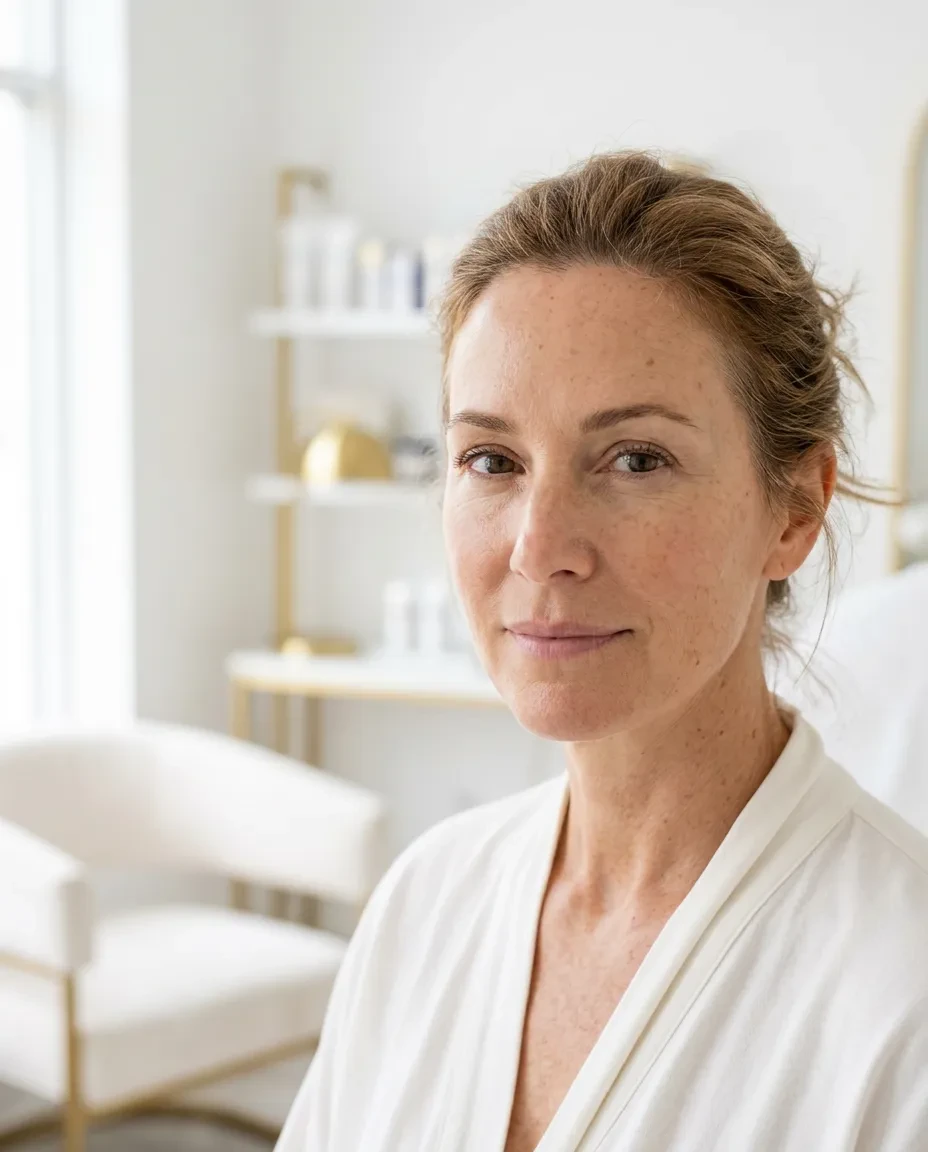
Dark Spots & Sun Damage
Phoenix Sun Keeps a Record
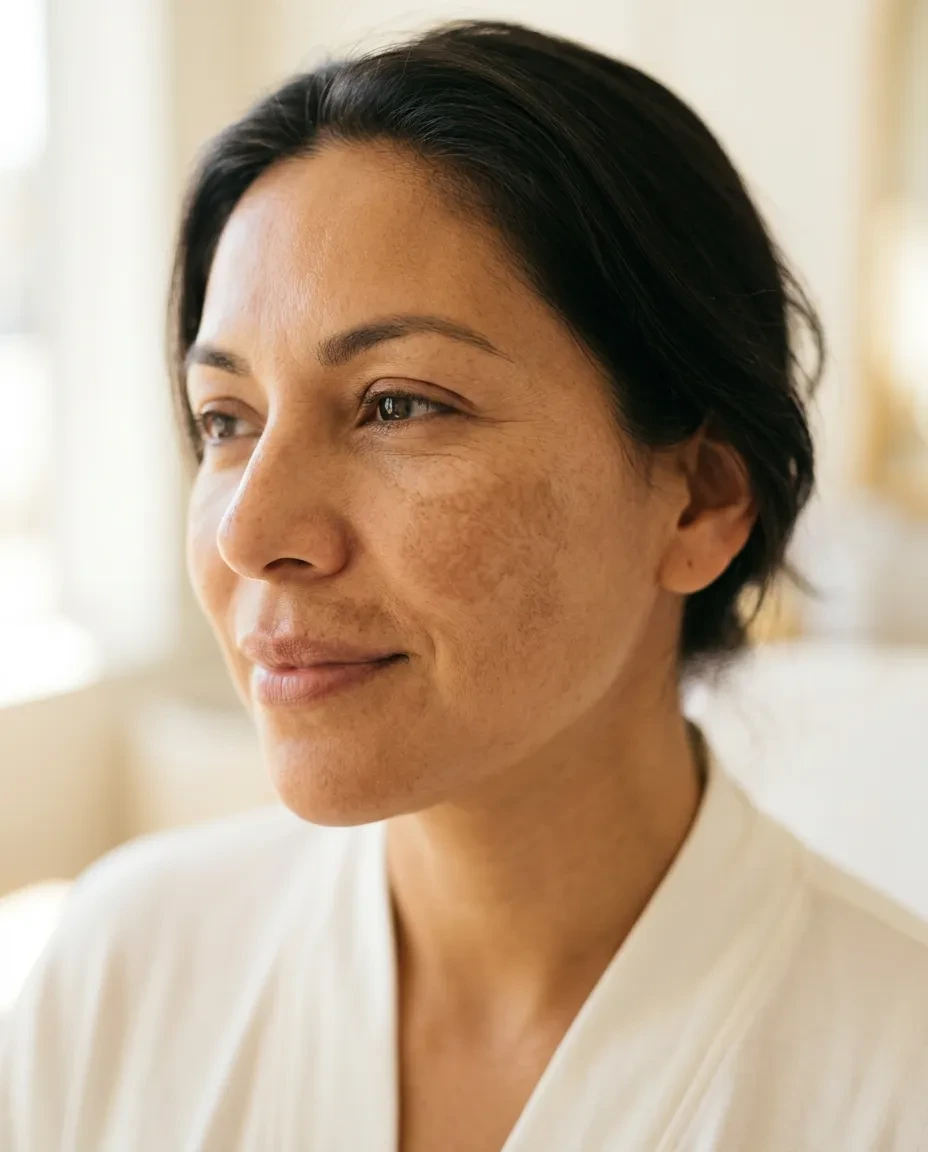
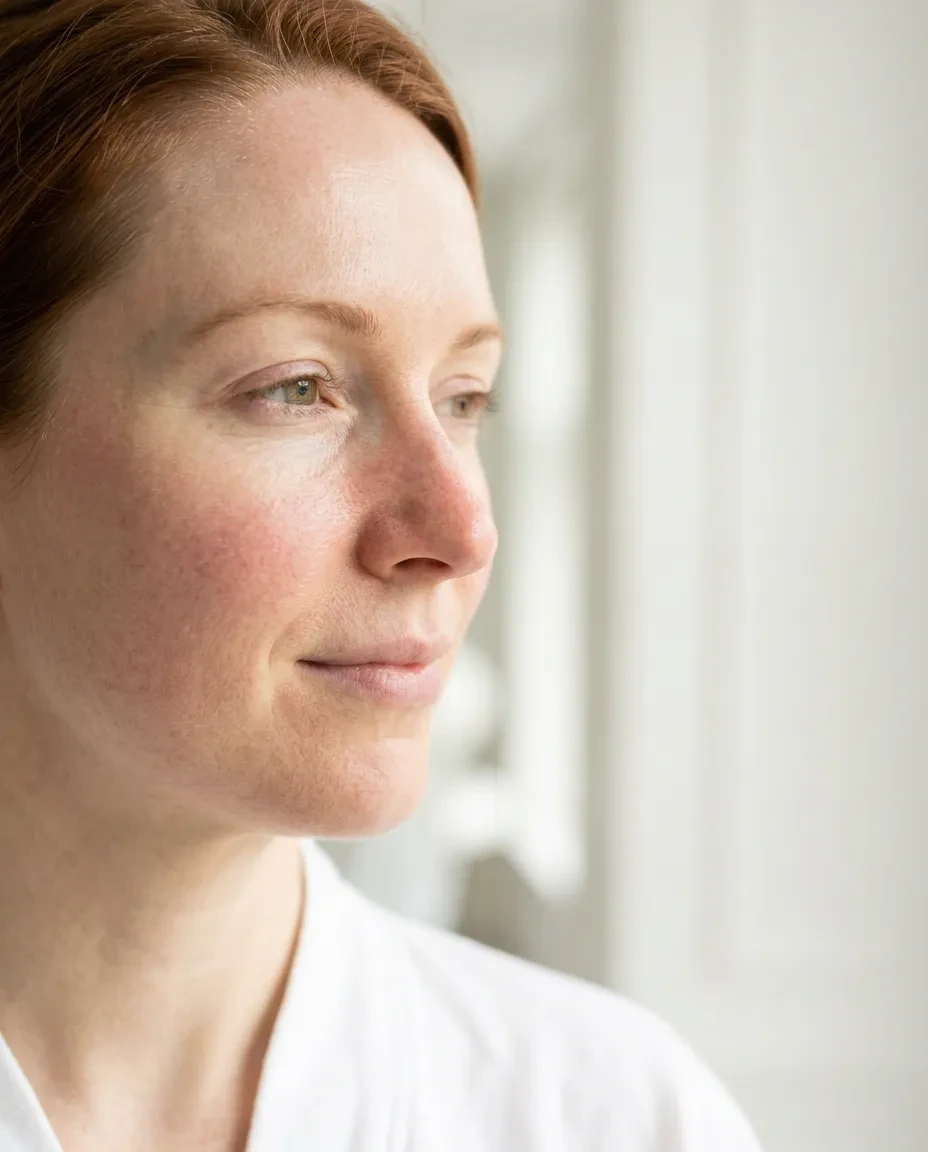
The spots arrived one at a time, so you did not clock them until a photograph put them together. Sun exposure banks pigment for years before it surfaces. Most of what you are seeing now was earned long before it appeared.
Dark Spots & Sun Damage
Phoenix Sun Keeps a Record
The spots arrived one at a time, so you did not clock them until a photograph put them together. Sun exposure banks pigment for years before it surfaces. Most of what you are seeing now was earned long before it appeared.
Why It Happens
What Puts Pigment Where You Do Not Want It
Pigment cells respond to light, to injury and to hormones, and they respond differently to each. Tasha Wright Ford, RN sorts which pattern you have before anything is aimed at it. Aiming the wrong device at the wrong pattern sets pigment back rather than forward.
01
Ultraviolet Exposure
Light tells pigment cells to make melanin as a shield. Repeat that for years in Arizona and clusters of those cells keep producing long after the exposure stops. A sun spot is a record.
02
Post-Inflammatory Marks
Acne, ingrown hairs and small injuries leave pigment behind as they heal. These marks sit where the inflammation was rather than where the sun fell. Picking at skin makes them darker.
03
Hormonal Pigment
Hormones drive a symmetrical pattern with soft edges rather than discrete spots. That is melasma, and it needs different handling entirely. Treating it as sun damage usually makes it worse.
04
Skin Type and Genetics
How readily your skin produces pigment is inherited. It also decides which devices are appropriate, which is why the assessment comes before the recommendation. Skin type is not a preference.
How We Treat It
Four Ways We Lift Facial Pigment
Clearing pigment means lifting what is there and closing off the supply. We work at different depths depending on where the pigment sits. Tasha assesses your skin type first, because the wrong device on the wrong skin makes pigment worse.
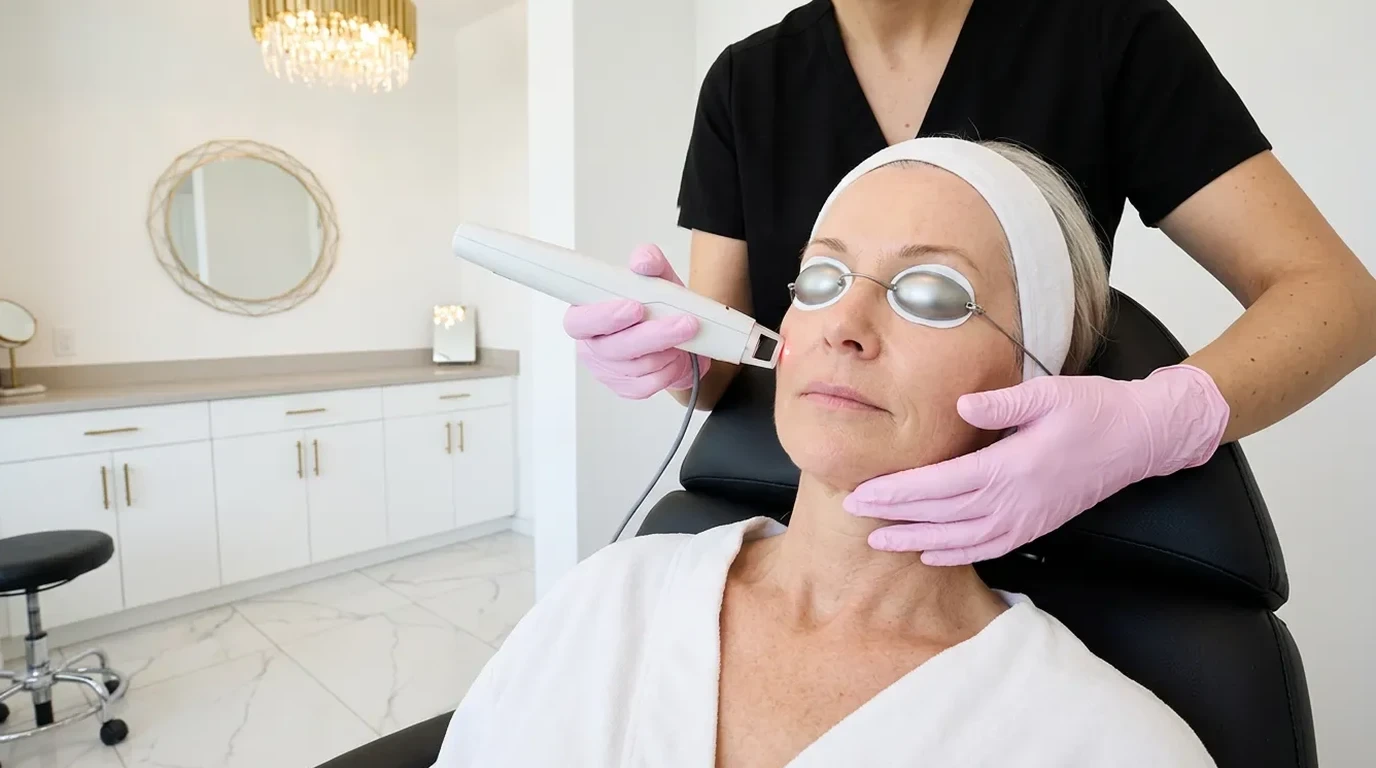
LaseMD Ultra
Our non-ablative laser, branded UltraGlo. It works under the surface, so the top layer of skin stays intact.
Patients with sun damage across a whole area rather than a handful of spots, and who want texture addressed at the same time.
Fractional columns of energy reach the layer holding pigment and prompt turnover, so the surface clears as new skin arrives.
Tasha sets the depth after she reads your skin. Expect redness and warmth, and we give you that window at your consultation.
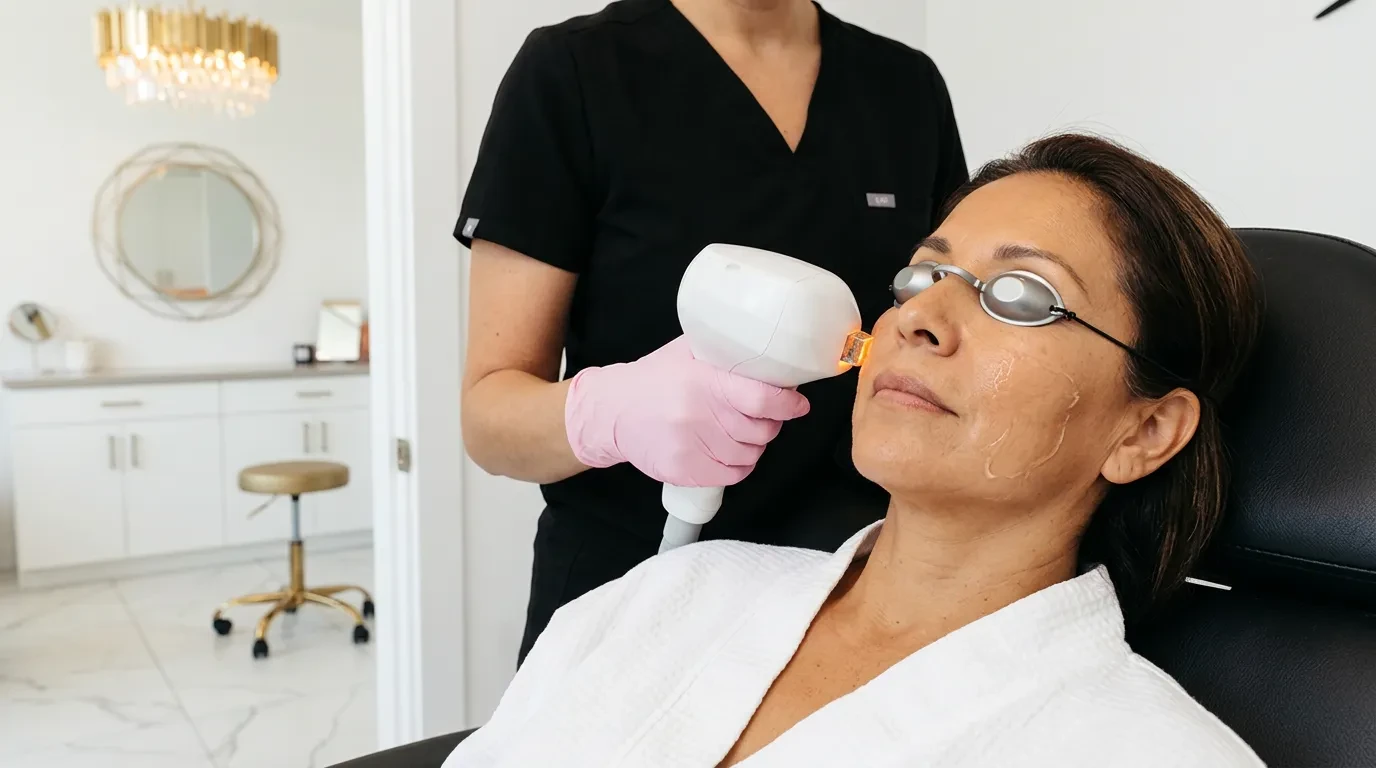
IPL / Photofacial
Broadband light absorbed by pigment and by the vessels carrying redness, treating both across a full face.
Patients with discrete brown spots on lighter skin types. It is not appropriate for every skin tone.
Light energy heats the pigment, which then rises to the surface and sheds over the following days.
Skin type is assessed before IPL is recommended at all. Where it is not suitable, Tasha says so and offers a different route.

Chemical Peels
Acid formulations that clear pigmented surface cells and prompt the layers beneath to turn over.
Patients with surface pigment and dullness, and those maintaining a result between laser sessions.
The peel removes the layers holding pigment, so newer cells reach the surface sooner than they would alone.
Depth is chosen to your skin and your schedule. Kelly talks you through what to expect before you book the appointment.

Skin Irregularity Removal
Direct treatment of individual pigmented lesions, actinic keratosis, cherry angiomas and spider veins.
Patients with a few specific spots rather than diffuse pigment across the face.
Each lesion is treated on its own rather than passing energy over the whole area.
Anything that has changed shape, color or size belongs with a dermatologist first. We treat what we are confident about and refer the rest.
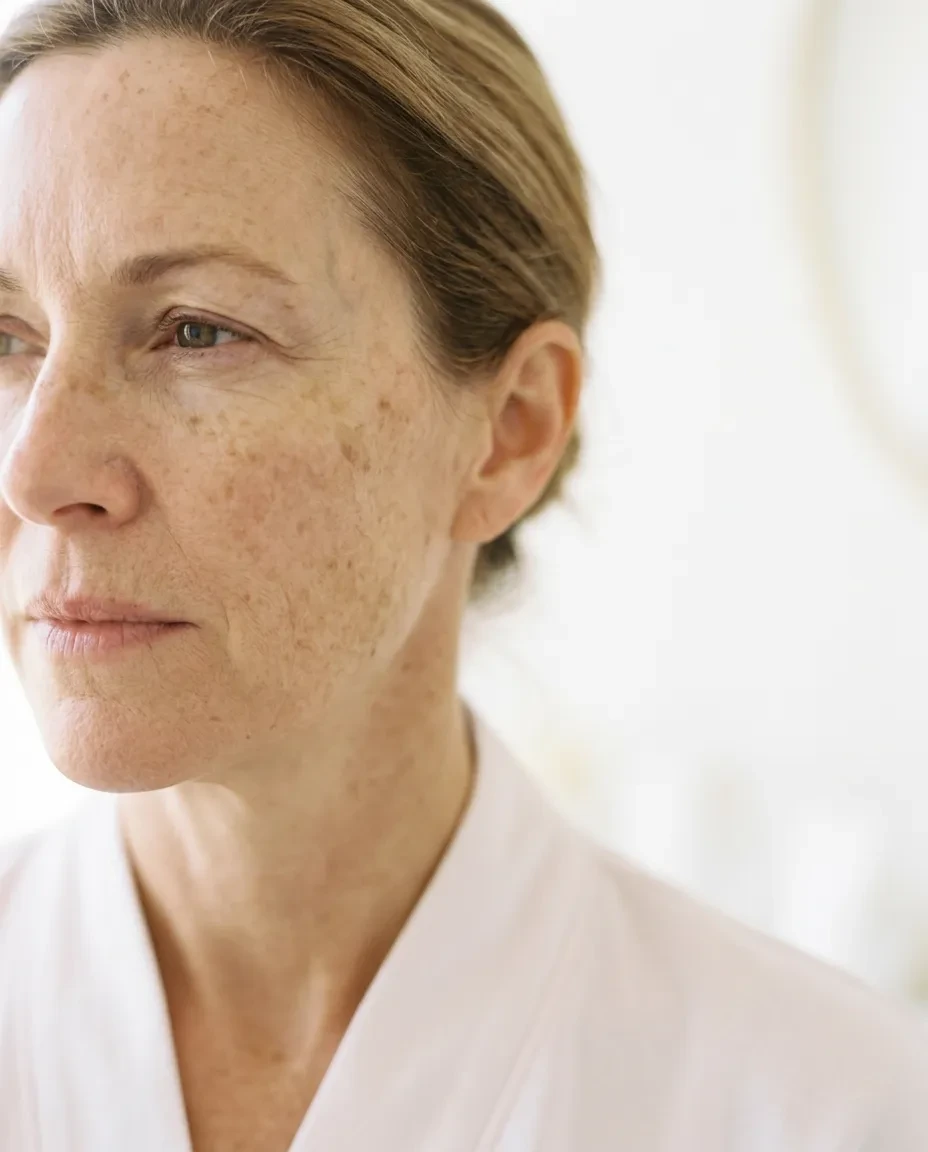
What We Check Before Treating Pigment
Pigment is the one area where the wrong choice sets you back. We assess skin type, the depth of the pigment and what has been feeding it. You hear which device is appropriate for your skin, and which one is not, before anything is booked. You leave with a written plan and a price, and no appointment you did not ask for.
Health History First
Medications that increase light sensitivity, recent sun exposure and pregnancy all change what is safe. We take the full history before we plan a device.
Sorting the Pattern
Discrete spots, post-inflammatory marks and hormonal patches look similar in the mirror and behave nothing alike. Tasha separates them before recommending anything.
When to Refer
A spot that is growing, changing color, bleeding or itching goes to a dermatologist before it comes to us. That referral is part of a proper assessment.
Holding the Result
Pigment cells stay capable after treatment. Daily broad spectrum protection and sensible timing outdoors are what keep the spots from filling back in.
Timing Around the Sun
Pigment work runs better outside peak sun, and treated skin needs shade afterwards. We plan the series around your calendar rather than starting it the week before a holiday.
Recommended Skincare
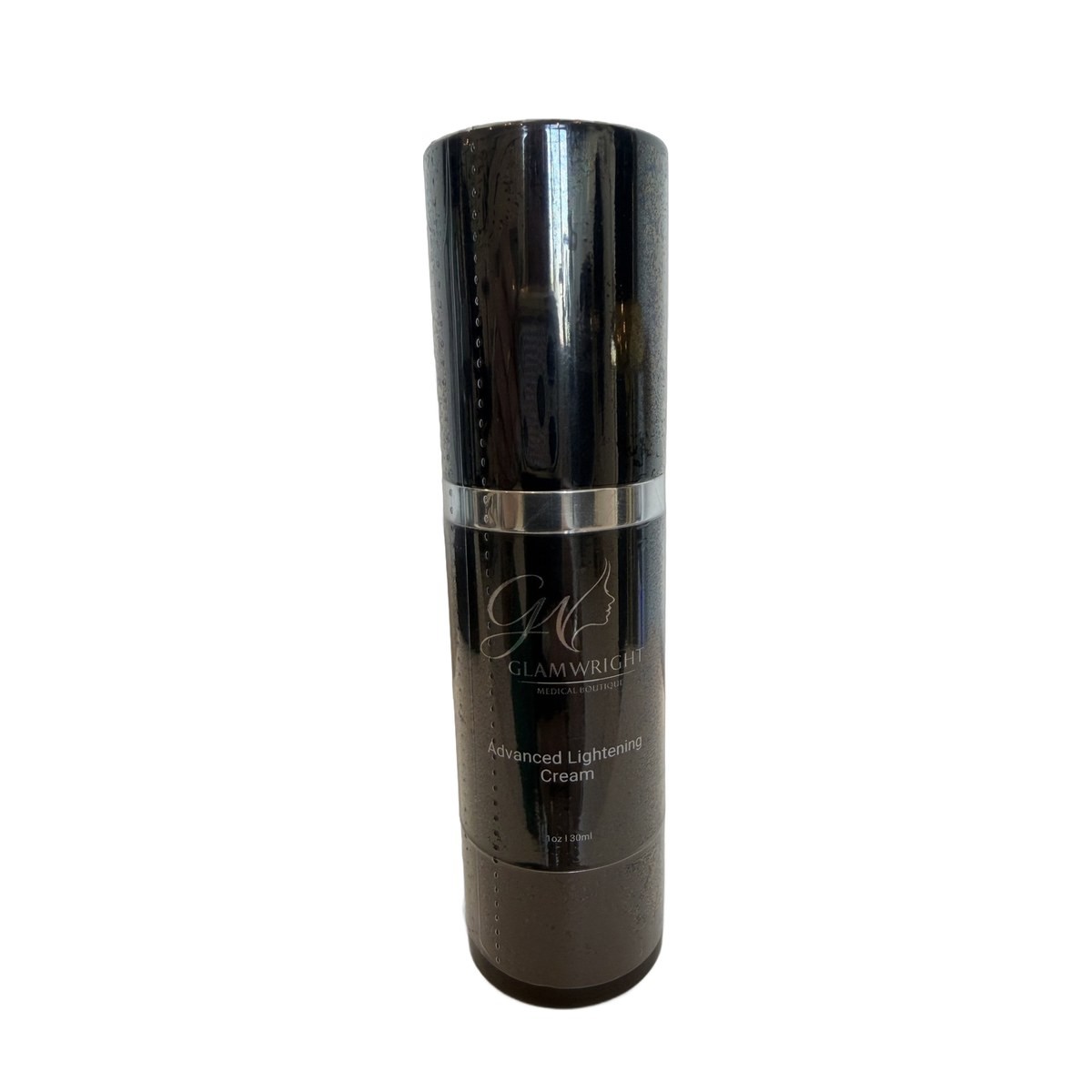
Advanced Lightening Cream
Discoloration that has already settled into the skin responds slowly. This cream is built for exactly that, and firming comes with it. It is what you use at home between peels or an IPL series.
Who provides your care
Registered Nurse-led care you can trust
Your plan is guided by Tasha Wright Ford, RN, our owner and lead injector, with 22 years as a Registered Nurse and 16 years of injecting experience. Dr. Anna Mkrtchyan, NMD, a Naturopathic Medical Doctor, serves as our Medical Director, and Kelly, our aesthetician, brings 17 years in skin and facial care. We assess your skin and full health history first, talk through whether a treatment is right for you, including anyone who should wait such as during pregnancy or with an active skin infection, and only recommend what genuinely suits you.


Start With A Consultation
We assess first. You leave with a plan and a price.
FAQ
Common Questions About
Dark Spots
Ultraviolet light tells pigment cells to produce melanin, and years of Phoenix sun bank the result. Inflammation from acne or injury leaves its own marks. Hormones drive a different pattern entirely, which we handle as melasma.
By lifting the pigment and closing off the supply. LaseMD Ultra and IPL target pigment at depth, chemical peels clear the surface layers, and individual lesions can be treated directly. Daily sun protection is what stops them returning.
A sun spot is discrete, sits where the light landed, and behaves predictably. Melasma is symmetrical, has soft edges, and answers to hormones as well as light. They need different handling, which is why melasma has its own page.
Yes, if the sun keeps working. The pigment cells are still there and still capable. Daily broad spectrum protection and sensible timing outdoors hold the result you paid for, which is why we spend time on that at your review.
It depends on how deep the pigment sits, how much of it there is, and your skin type. Some faces clear in a short series and some need a longer plan. Tasha gives you a session estimate with your written plan.
No. IPL relies on contrast between pigment and skin, so it is not appropriate for every tone and can cause harm where it is misapplied. Tasha assesses your skin type before recommending it, and often recommends something else.
Yes, if it has changed. Anything growing, changing shape or color, bleeding or itching belongs with a dermatologist before it belongs with us. We treat pigment we are confident about and refer the rest.
Topicals slow pigment production and help maintain a result. On their own they rarely shift established sun damage, because the pigment sits deeper than a cream reaches. They earn their place alongside in-clinic work rather than instead of it.