

Sagging & Loose Facial Skin
Skin That No Longer Springs Back
You press a fingertip to your cheek and the skin takes a moment to settle. Makeup catches where it never used to. The change is in the scaffolding under the surface. It happens slowly enough that photographs notice before you do.
Sagging & Loose Facial Skin
Skin That No Longer Springs Back
You press a fingertip to your cheek and the skin takes a moment to settle. Makeup catches where it never used to. The change is in the scaffolding under the surface. It happens slowly enough that photographs notice before you do.
Why It Happens
What Holds Skin Up and What Lets It Go
Skin stays where it is through collagen, elastin and the fat sitting under it. All three change with age, and Phoenix adds its own pressure. Tasha Wright Ford, RN reads which one is furthest along. How much elasticity is left decides whether we can help you at all.
01
Collagen Production Slows
Your skin makes less collagen every year after your twenties. Less collagen means less tension across the surface, so the skin starts following the shape underneath it. The change is gradual and constant.
02
Elastin Stops Recoiling
Elastin is what snaps skin back after you pinch it. Once damaged it is not replaced well, so the skin holds a crease instead of releasing it. That pinch test is part of your assessment.
03
Support Underneath Drops
Fat pads descend and bone remodels, so the frame the skin sits on changes shape. The same skin now has more surface to cover and less to grip. Firming alone will not answer that.
04
Sun and Weight Change
Ultraviolet damage breaks elastin faster than anything else. Rapid weight loss then empties the face before the skin has any chance to keep up. Phoenix supplies plenty of the first.
How We Treat It
Four Ways We Firm Facial Skin
Firming skin means giving it more collagen and something to hold onto. We work from inside the skin and from underneath it at the same time. Tasha assesses how much elasticity is left before she recommends a route.
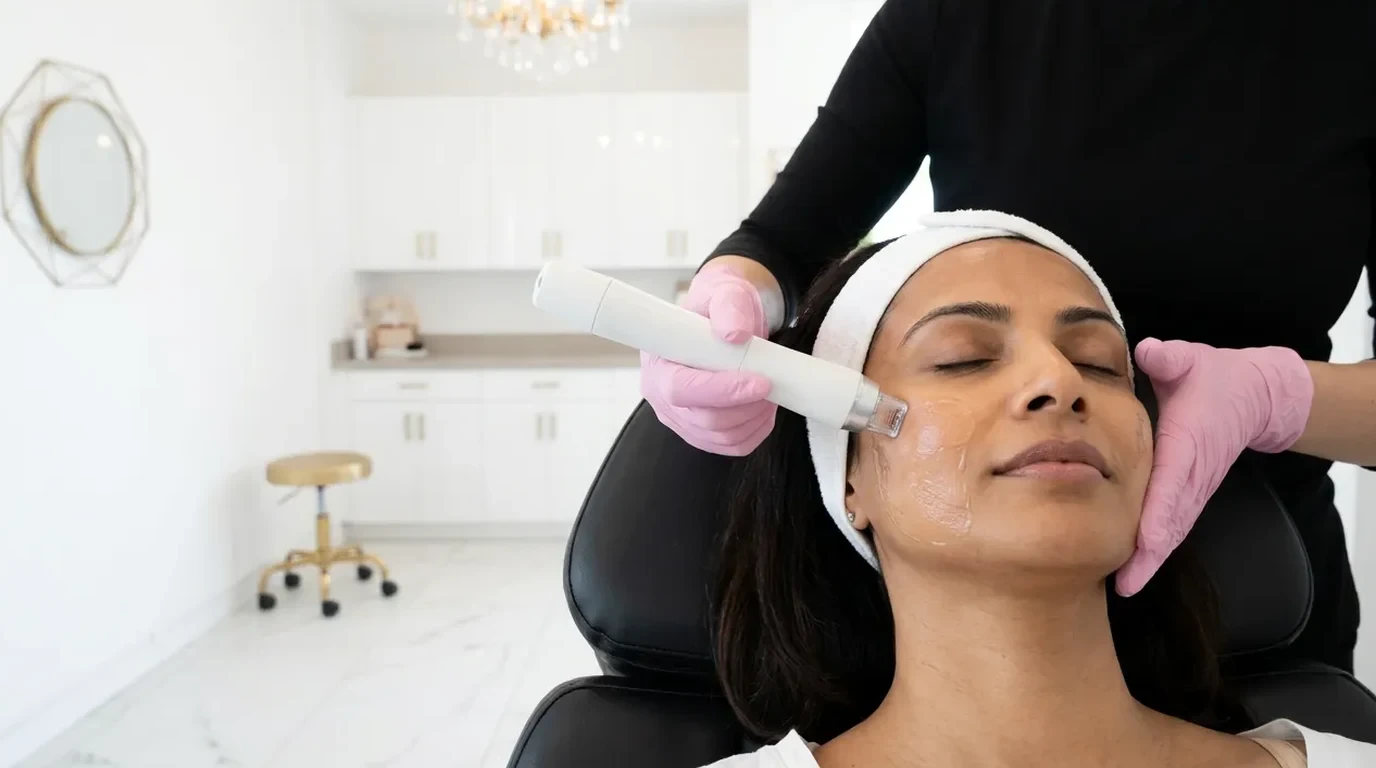
RF Microneedling
Radiofrequency energy delivered through fine needles, heating the dermis so it lays down new collagen.
Patients with early to moderate laxity whose skin still has some spring left in it.
Heat at a set depth prompts a controlled repair response, and the skin firms as the new collagen matures.
Depth and energy are mapped to each area of the face. It is done as a series, reviewed against photographs rather than memory.
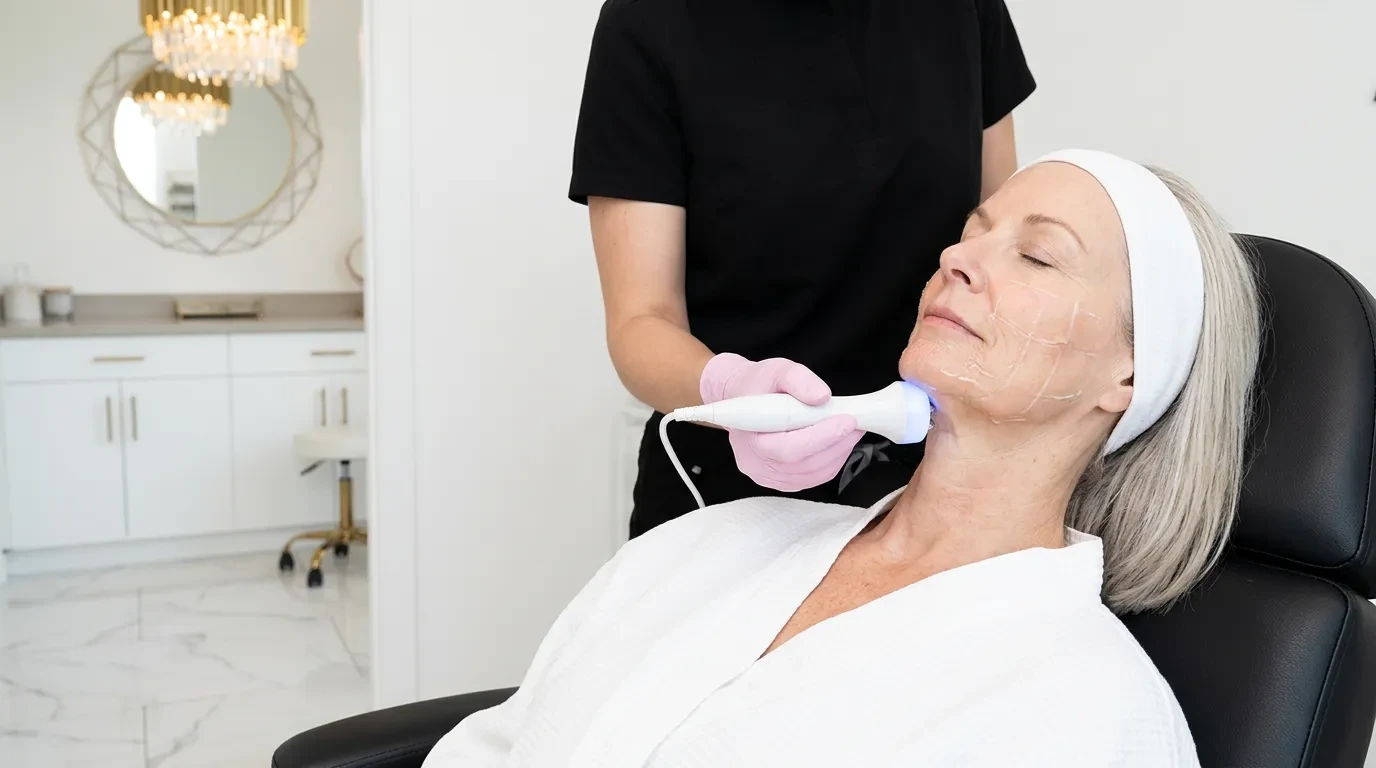
Skin Tightening
Non-surgical tightening that delivers energy across lax skin without breaking the surface.
Patients who want firming with no downtime, and those pairing it with injectable work.
Even heat contracts existing collagen and signals the skin to build more over the following weeks.
Comfortable enough to sit through in one visit. Kelly and Tasha set the schedule alongside everything else in your plan.
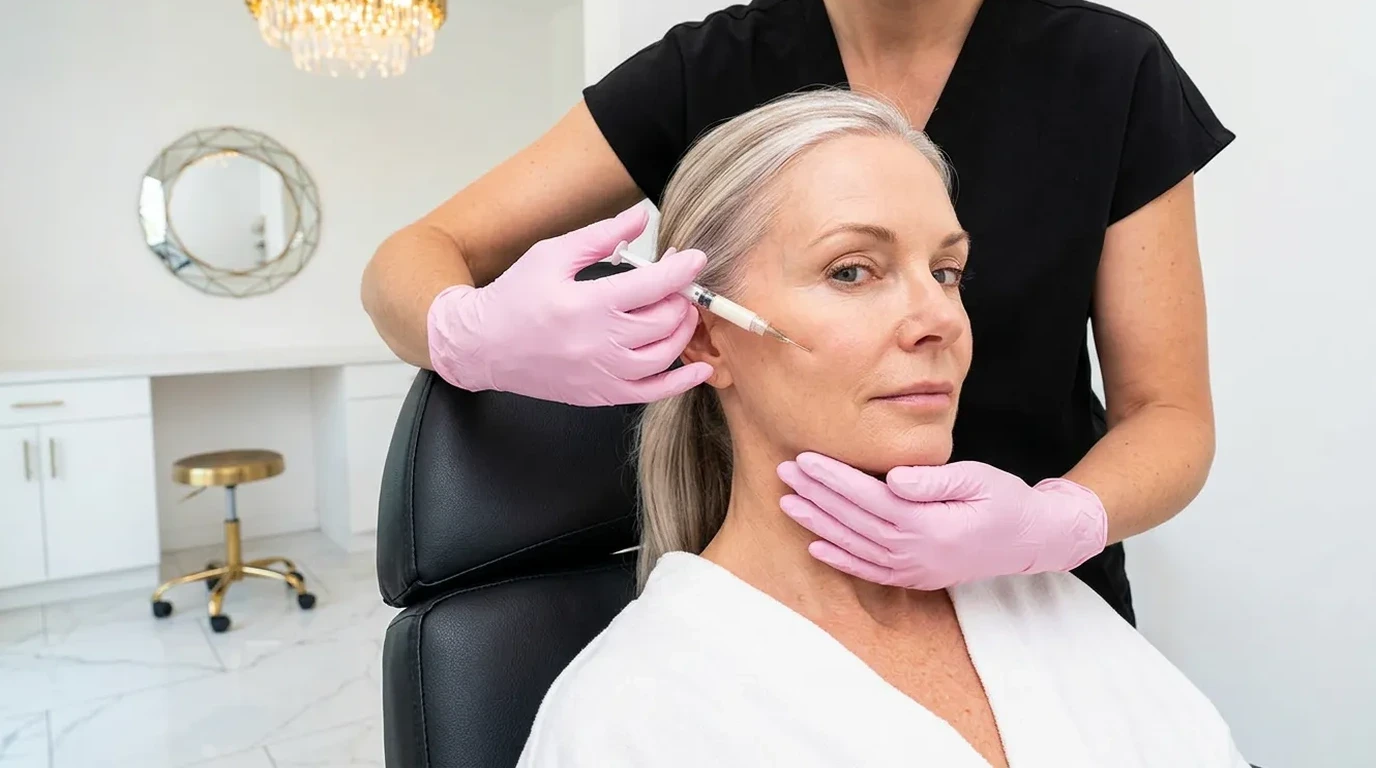
Sculptra
Poly-L-lactic acid that stimulates your own collagen across a broad area rather than filling one point.
Patients whose face has thinned overall, including after weight loss, and who accept a gradual change.
The material prompts collagen through the treated plane, which restores some of the support the skin lost.
Sessions are spaced and reassessed each time. Tasha photographs before each one so the change is measured rather than remembered.
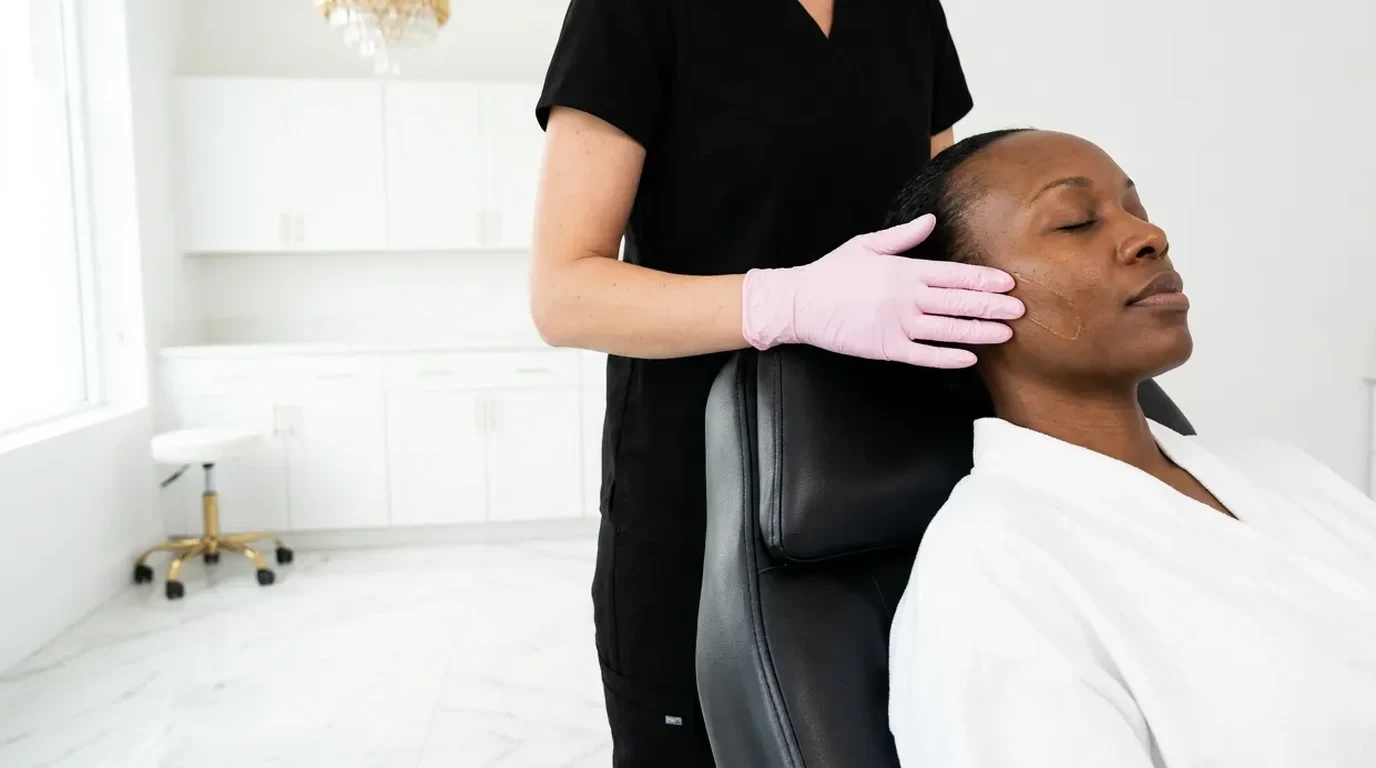
PRX-T33
A bio-revitalizing peel that works without needles and without visible peeling.
Patients who want the surface firmed between deeper treatments, or who cannot take downtime at all.
The formula drives activity in the dermis without breaking the surface, so there is no heat and no wound to heal.
It is done in a short series. Kelly will tell you how it fits alongside the rest of your plan before you book.

What Your Skin Assessment Covers
We assess elasticity by hand as well as by eye, because a photograph cannot tell you how skin behaves when you move it. You hear how much is workable with energy and collagen, and where the honest answer is surgical. Nothing is booked in the chair. You leave with a written plan, a price, and no pressure to use either today.
Health History First
Autoimmune conditions, medications and recent weight change all affect how skin heals. We take the full history before we plan any energy treatment.
Testing Elasticity
Tasha checks how quickly the skin returns after it is lifted, in several areas. That tells her more about what will work than the way it looks at rest.
Support the Collagen
Collagen needs protein, vitamin C and sleep to build. Dr. Anna Mkrtchyan, NMD can look at the wellness side where nutrition is holding the result back.
Protect What You Build
Ultraviolet light undoes collagen faster than we can build it. Daily protection is the difference between holding a result and repeating a series.
Realistic From the Start
You hear the ceiling before you hear the plan. Energy and collagen work firm skin that still has elasticity, and where yours has gone past that, Tasha says so at the first visit.
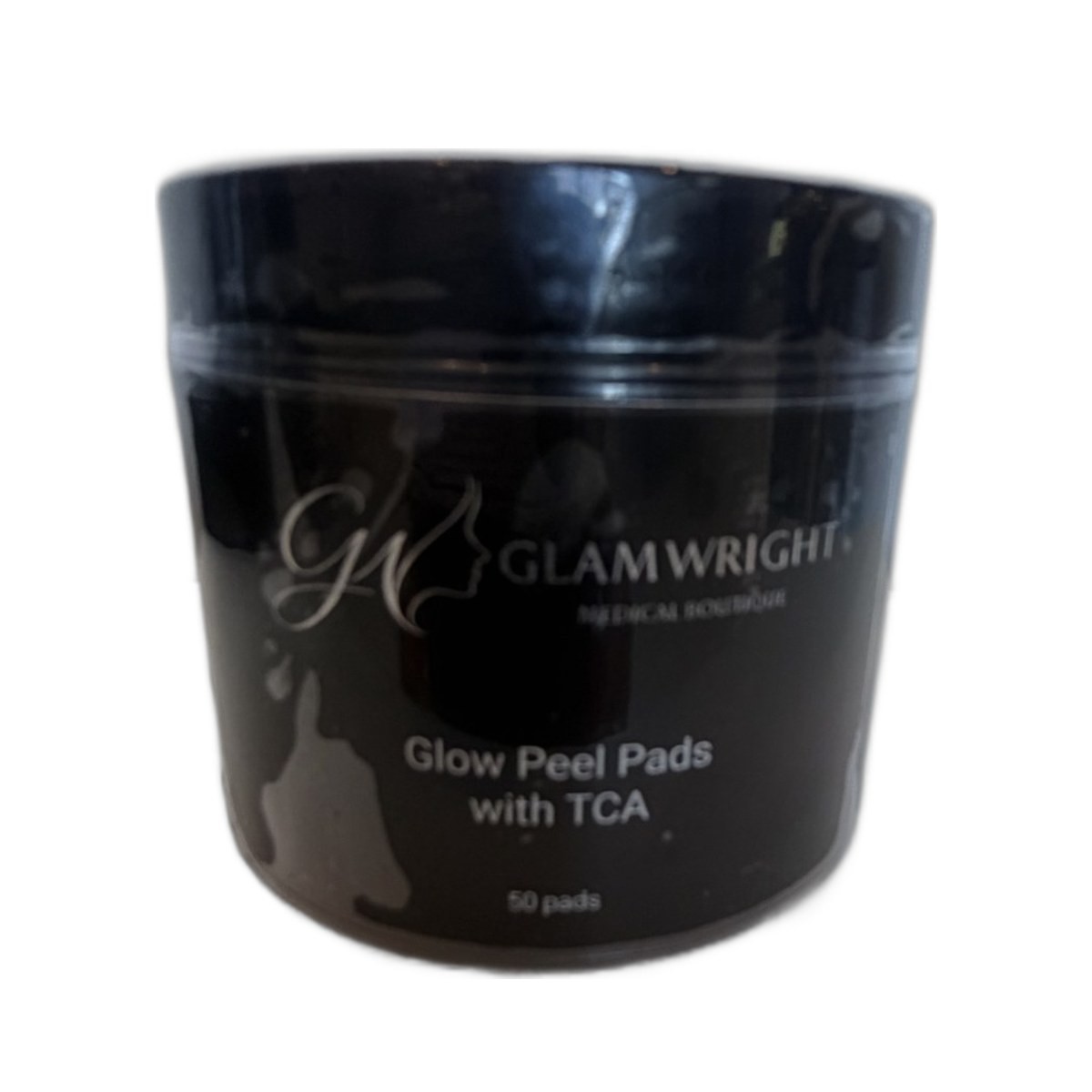
Recommended Skincare
Glow Peel Pads with TCA
Laxity starts with collagen, and TCA supports it by raising ceramide and free fatty acid levels. These are peel strength on a pad, so agree the frequency with your provider before you start.
Who provides your care
Registered Nurse-led care you can trust
Your plan is guided by Tasha Wright Ford, RN, our owner and lead injector, with 22 years as a Registered Nurse and 16 years of injecting experience. Dr. Anna Mkrtchyan, NMD, a Naturopathic Medical Doctor, serves as our Medical Director, and Kelly, our aesthetician, brings 17 years in skin and facial care. We assess your skin and full health history first, talk through whether a treatment is right for you, including anyone who should wait such as during pregnancy or with an active skin infection, and only recommend what genuinely suits you.



Start With A Consultation
We assess first. You leave with a plan and a price.
FAQ
Common Questions About
Sagging Skin
Collagen and elastin fall away, the fat pads that filled the face descend, and skin that used to sit over structure now drapes. Sun exposure speeds all three up. Weight loss can strip the support underneath faster than skin adapts.
No single deficiency causes it. Nutrition matters, because collagen needs protein and vitamin C to build, and poor intake does show in the skin. The driver is still collagen and elastin loss with age. Dr. Anna Mkrtchyan, NMD reviews the wellness side.
With energy and collagen stimulation. RF microneedling puts controlled heat at depth, skin tightening works across the surface, and Sculptra builds collagen from within over a series. The PRX-T33 firms the surface between them.
Lose it at a pace your skin can follow, keep protein high, and hold your weight once you get there. Collagen work started during the process gives skin more to hold with. None of that guarantees an outcome, and it gives you a better chance.
No. They compress tissue for a short while and change nothing about collagen, ligament or bone. What you see in the mirror afterwards is fluid moved around, and it settles back on its own.
Expect heat and pressure rather than sharp pain. RF microneedling is done with numbing cream applied first. Kelly and Tasha talk you through what each setting feels like before it is used, and settings can be adjusted in the room.
Collagen work is slow by design, because you are waiting on your own body to build. Surface treatments read sooner than deep stimulation. We photograph at set review points, and Tasha sets that schedule with your plan.
Some of it. Energy devices and collagen stimulators firm skin that still has elasticity left. Where the skin has genuinely stretched past that, surgery is the honest answer and Tasha will say so rather than sell you a series.