

Under-Eye Hollows & Tear Trough
The Shadow Under Your Eyes
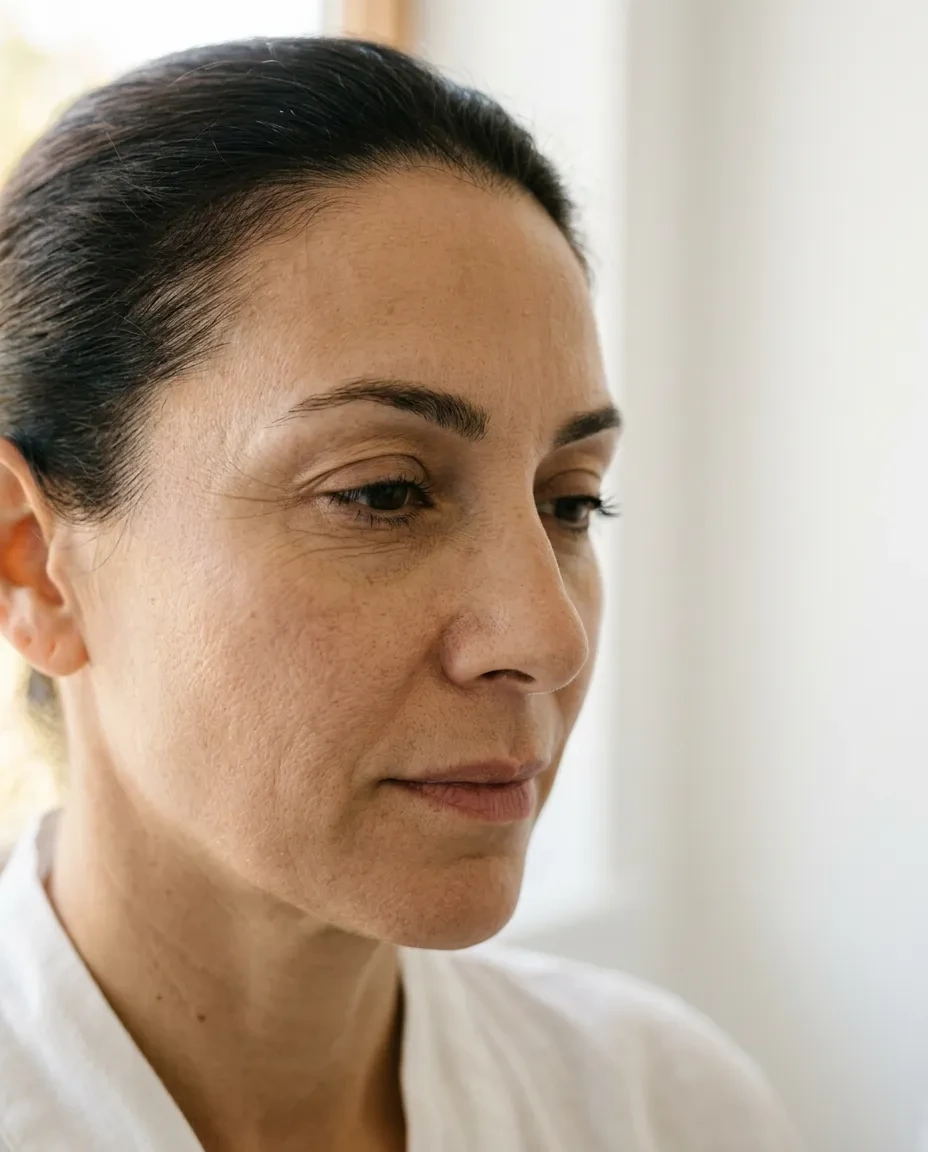
The shadow under your eyes may have nothing to do with sleep. Volume shifts. The rim underneath becomes visible, and light stops falling evenly across your face. We look at the whole midface before deciding whether filler belongs there at all.
Under-Eye Hollows & Tear Trough
The Shadow Under Your Eyes
The shadow under your eyes may have nothing to do with sleep. Volume shifts. The rim underneath becomes visible, and light stops falling evenly across your face. We look at the whole midface before deciding whether filler belongs there at all.
Why It Happens
Hollowing Is Anatomy Before It Is Fatigue
Four things create the shadow, and only one of them is tiredness. Tasha Wright Ford, RN works out which one you have before she decides whether filler belongs under your eye. Get that wrong and the result reads heavier than the problem you walked in with.
01
The Orbital Rim Shows
A ridge of bone runs under your eye socket. As the cheek fat above it drops away, that ridge starts casting a line you can see in most light. Overhead lighting makes it worst.
02
Fat Pads Move Forward
The fat that cushions the eye can push forward as the retaining ligament weakens. That creates a bag above the hollow, so the shadow gains a hard edge. Filler there makes it heavier.
03
Skin Thins and Darkens
The skin under your eye is the thinnest on your body. As it thins further, the vessels beneath it show through as blue or purple. That color is not a shadow at all.
04
Pigment and Sun
Phoenix sun drives pigment into the under-eye skin over years. That is color rather than shadow, and filler does nothing for it. Lifting it takes work on the skin itself.
How We Treat It
What Belongs Under the Eye
The under-eye is the least forgiving area on the face. A hollow that is really a fat pad gets worse with filler, so Tasha assesses the cause before she opens anything. Some faces are better served by treating the skin instead.
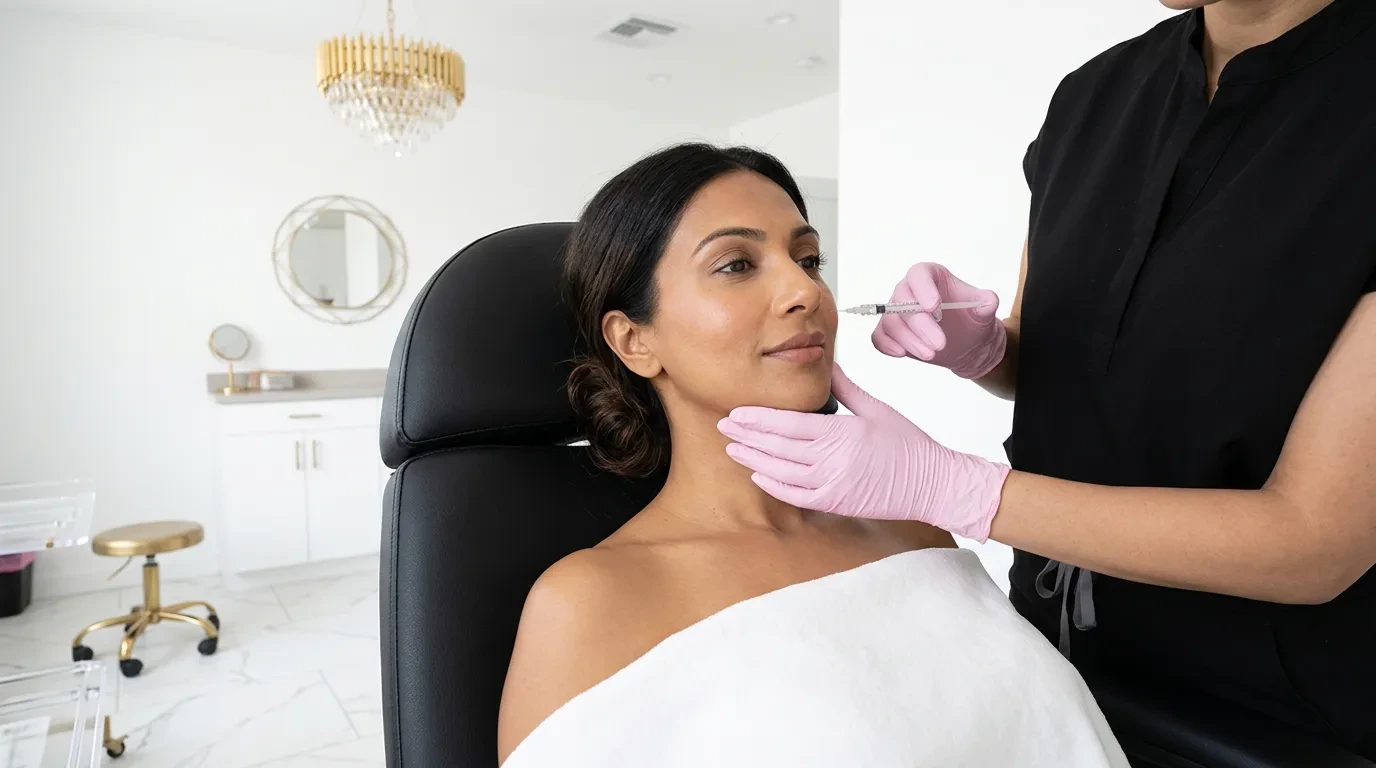
Dermal Fillers
Hyaluronic acid placed in the tear trough to soften the step between the lower lid and the cheek. It can be dissolved, which matters here more than anywhere.
Patients whose hollow comes from lost volume, with skin that still holds its tone and no standing fluid retention.
A small amount sits deep against the bone and softens the ridge casting the shadow. Restoring the cheek above it often does half the work.
Tasha assesses the midface first, then the lid. If the cheek is the real problem, she treats that and you may need nothing under the eye.
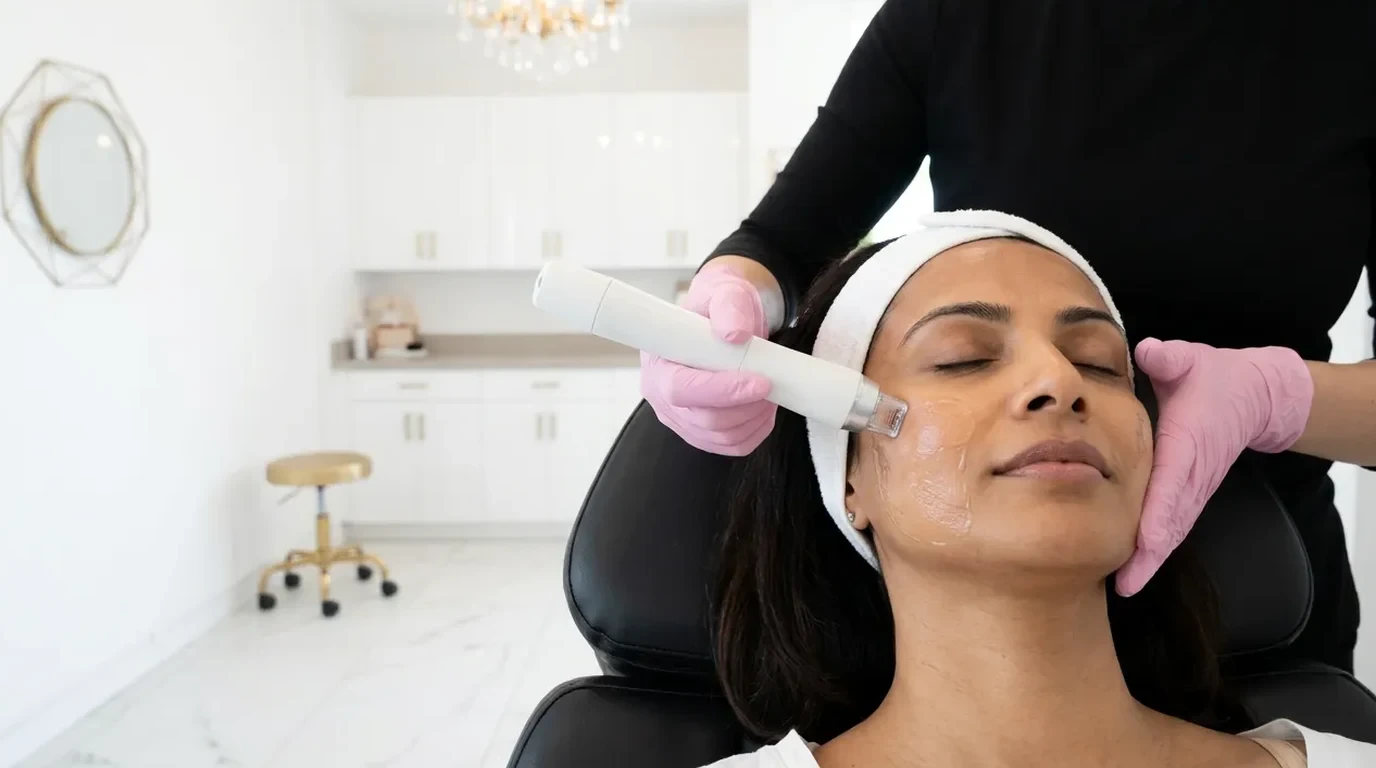
RF Microneedling
Radiofrequency energy delivered through fine needles, which remodels collagen in the skin rather than adding anything under it.
Patients whose main issue is thin, crepey skin under the eye rather than a true hollow.
Heat at a controlled depth prompts the skin to build collagen, so the surface reads firmer across a series.
We map the depth to the area, because under-eye skin takes a lighter setting than a cheek. Sessions are spaced and reviewed against photographs.
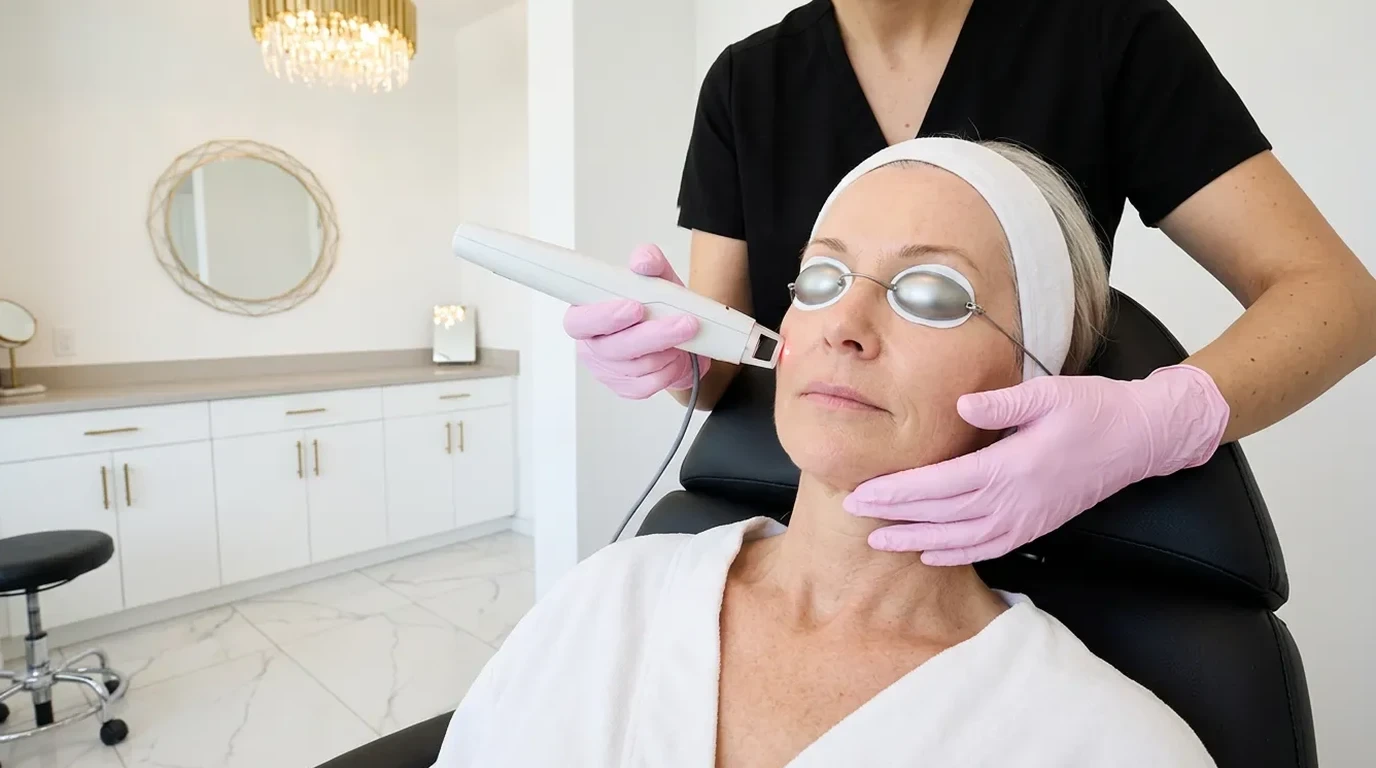
LaseMD Ultra
LaseMD Ultra is our non-ablative laser, branded UltraGlo. It works under the surface, so the top layer of skin stays intact.
Patients with pigment and texture around the eye, where the darkness is color sitting in the skin rather than a shadow.
Fractional columns of energy reach the layer holding pigment and prompt turnover. Tasha sets the depth after she reads your skin.
Expect redness and warmth afterwards. How long that lasts depends on the depth we choose, and we give you that window at your consultation.

Before Anything Goes Under Your Eye
This area gets the longest assessment of anything we treat. We look at you upright, in real light, and at rest. You hear whether filler is the answer, and often the answer is that it is not. That answer costs you nothing and it is the most useful part of the visit.
Health History First
Thyroid conditions, allergies, kidney function and sleep all change how the under-eye behaves. We take the full history before we look at the anatomy.
Cause Before Product
We work out whether you have a hollow, a fat pad, thin skin or pigment. Those four need four different answers, and two of them are never filler.
Fluid and Lifestyle
Under-eye tissue holds water. Salt, alcohol and sleep move the result week to week, so we set that expectation before treatment rather than after it.
Sun and Pigment
Phoenix light is relentless on this skin. Daily sun protection holds whatever result you get here, and it asks the least of you of anything in the plan.
When We Say No
Some under-eyes are better left alone, and you hear that in the room. Turning a treatment down costs us an appointment and saves you a result you would rather have reversed.
Who provides your care
Registered Nurse-led care you can trust
Your plan is guided by Tasha Wright Ford, RN, our owner and lead injector, with 22 years as a Registered Nurse and 16 years of injecting experience. Dr. Anna Mkrtchyan, NMD, a Naturopathic Medical Doctor, serves as our Medical Director, and Kelly, our aesthetician, brings 17 years in skin and facial care. We assess your skin and full health history first, talk through whether a treatment is right for you, including anyone who should wait such as during pregnancy or with an active skin infection, and only recommend what genuinely suits you.




Start With A Consultation
We assess first. You leave with a plan and a price.
FAQ
Common Questions About
Under-Eye Hollows
Four separate things, and they need four different answers. The orbital rim showing through, fat pads moving forward, skin thinning, and pigment sitting in the skin. Filler helps two of those and makes one of them worse, so the assessment matters here.
By treating the actual cause. If the hollow is lost volume, a small amount of hyaluronic acid placed deep against bone softens the step. If the cheek above it has dropped, restoring the cheek often does most of the work.
Sometimes. Where the problem is thin, crepey skin rather than a hollow, RF microneedling or LaseMD Ultra work on the skin itself. Where it is pigment, filler does nothing at all. Tasha tells you which one you have.
The tear trough is the groove running from the inner corner of the eye along the orbital rim. Everyone has one. It only becomes visible when the cheek fat above it drops away and light stops crossing the area evenly.
It tends to hold longer here than around the mouth, because the under-eye moves less. How long depends on the product, the amount and your own metabolism. Tasha gives you a realistic window at your consultation.
It can, when the wrong candidate is treated or the product sits too shallow. Under-eye tissue holds water, so a hollow that is really a fat pad gets worse with filler. That is exactly what the assessment is for.
It is a medical procedure in a delicate area, which is why who does it matters. Tasha Wright Ford, RN has 16 years of injecting behind her and is a Master Injector. She takes a full health history before any product is opened.
Sleep, hydration and lower salt reduce the puffiness that sits alongside a hollow. None of them replace volume that has gone. If the shadow is structural, eye cream will not change it, and we would rather say so at the consultation.