

Hair Loss & Thinning
The Part Line Keeps Widening
You noticed it in the shower first, then in the part, then in photographs taken under a ceiling light. Hair loss is slow enough to argue with and steady enough to win. What matters now is the pattern, because the pattern decides the plan.
Hair Loss & Thinning
The Part Line Keeps Widening
You noticed it in the shower first, then in the part, then in photographs taken under a ceiling light. Hair loss is slow enough to argue with and steady enough to win. What matters now is the pattern, because the pattern decides the plan.
Why It Happens
Why Hair Thins and Where
Hair loss has more than one cause, and each leaves a different signature. Where you are losing it tells us more than how much. Tasha Wright Ford, RN and Dr. Anna Mkrtchyan, NMD assess that side together. How long it has been going on matters as much as the pattern does.
01
Pattern Hair Loss
The familiar form follows a map: a receding front and crown in men, a widening part in women. Follicles miniaturize and produce finer hair before they stop. The map is most of the diagnosis.
02
Thyroid and Hormones
Thyroid conditions, postpartum shifts and menopause all move hair off its normal cycle. Those need a medical answer before they need a scalp one. Bloodwork answers what the mirror cannot.
03
Nutrition and Iron
Iron, protein and vitamin D all feed the follicle. Restrictive eating and rapid weight loss show up in the hair well after the fact. By then the cause has often passed.
04
Stress and Traction
A shock to the system can push a wave of hair into shedding at once. Tight styles pull at the hairline until the follicle gives up. One of those recovers on its own.
How We Treat It
Two Routes We Use for Thinning Hair
Hair restoration works on live follicles. It cannot bring back a scalp that has been smooth for years, and it can do real work on a follicle still cycling. The assessment decides which of those you have before anything is booked.
Consultation and Scalp Assessment
A full history, a look at the scalp itself, and standardized photographs taken before anything is planned.
Everyone starts here. Hair loss with a medical driver is treated at the driver first, and that is only visible in the history.
Tasha Wright Ford, RN reads the pattern and the scalp. Dr. Anna Mkrtchyan, NMD reviews thyroid, iron and hormonal questions where they apply.
You leave with a plan in writing and a price. Where the honest answer is bloodwork before any treatment, that is what you hear.

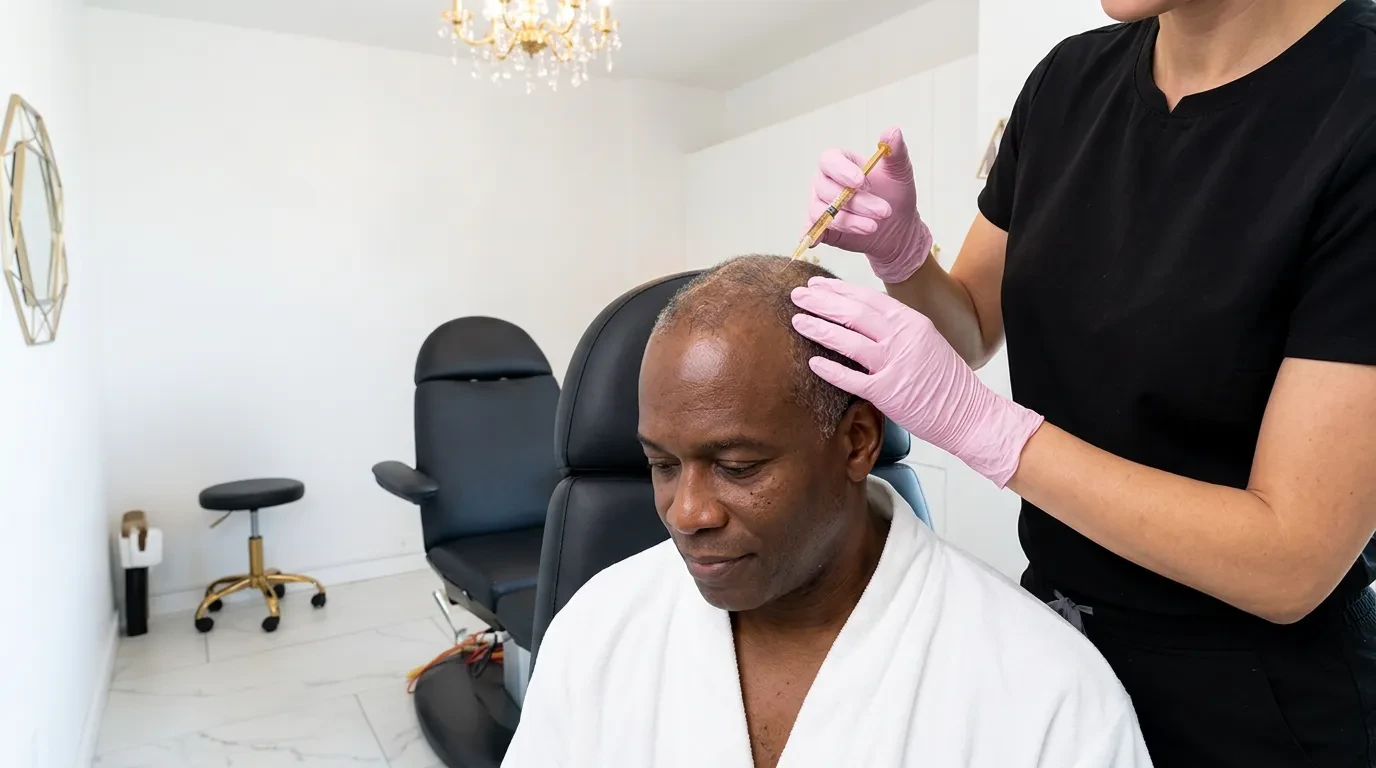
PRP for Hair Loss
Platelet-rich plasma drawn from your own blood, concentrated and placed into the scalp. Nothing synthetic goes in.
Patients whose follicles are thinning rather than gone, and who can commit to a series rather than a single visit.
Growth factors from your own platelets are delivered around the follicle to support the cycle it is still running.
Blood is drawn and spun in the room, then placed across the thinning area. Tasha maps the treatment zone against your loss pattern each time.
Hair Restoration
The broader program built around your loss pattern rather than a single procedure. It pairs in-clinic treatment with the medical side.
Patients who want the cause addressed as well as the scalp. Anyone whose loss has an underlying medical driver starts here.
We assess the pattern, review the health history and build a plan across both. Dr. Anna Mkrtchyan, NMD reviews anything hormonal or nutritional.
Photographs are taken at set intervals so progress is measured rather than remembered. We review the plan against those images.
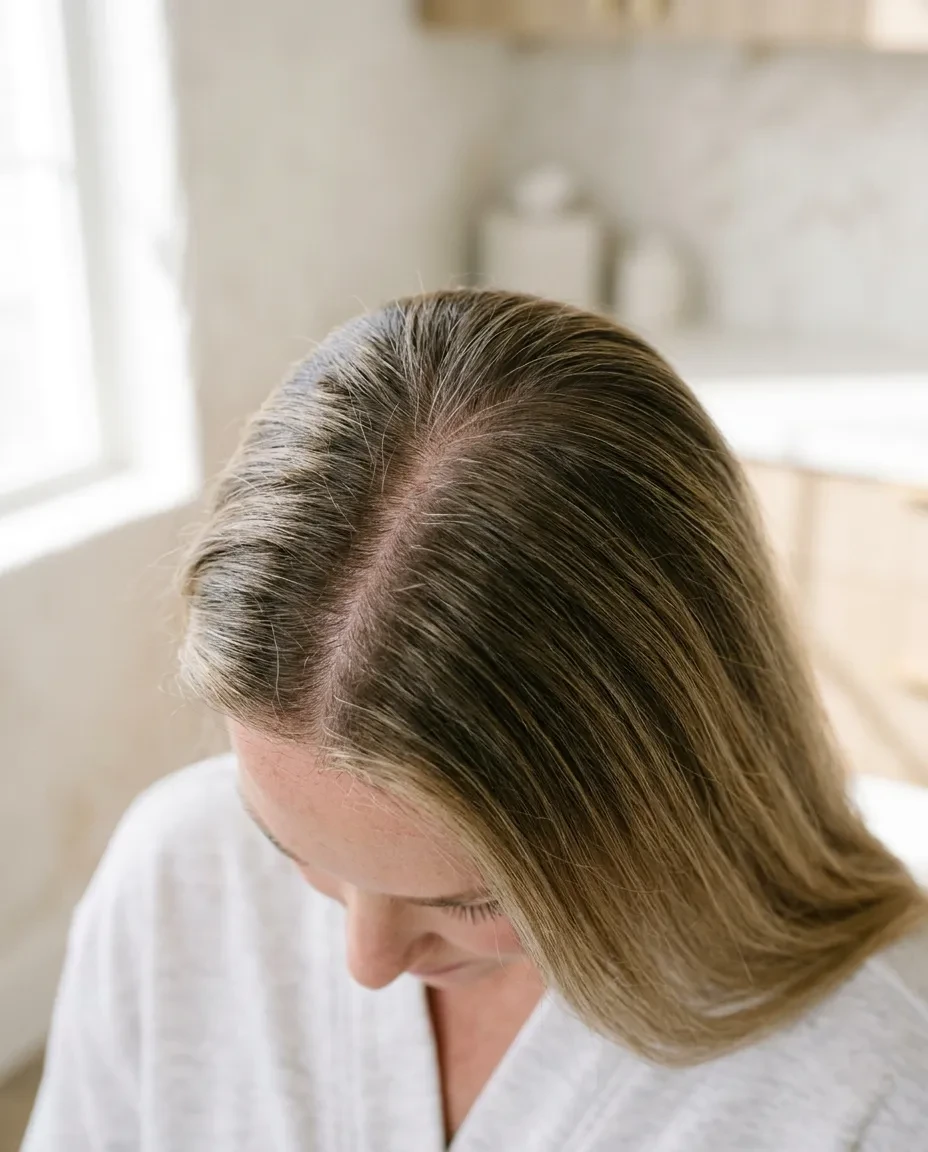
What Your Scalp Assessment Covers
The first appointment is mostly questions. When it started, how fast, what else changed, what runs in your family. Then we look at the scalp itself and photograph it, because the mirror is a poor witness over months. You leave with a plan, a price, and a set of images to measure against.
History and Medications
Illness, surgery, pregnancy, crash dieting and several common medications all move hair off its cycle. The timeline usually explains more than the scalp does.
Reading the Pattern
Diffuse shedding, a widening part and a receding hairline point at different causes. Tasha reads which one you have before anything is recommended.
The Medical Side
Where thyroid, iron or hormones look involved, Dr. Anna Mkrtchyan, NMD reviews that first. Treating the scalp while the cause runs on wastes your money.
Measured, Not Remembered
We take standard photographs at set review points. Hair changes too slowly for memory to judge, and this is the only honest way to track it.
What We Will Not Claim
No treatment regrows a follicle that has gone. We work on hair that is still cycling, and we say plainly when the window for that has closed rather than selling you a series.
Who provides your care
Registered Nurse-led care you can trust
Your plan is guided by Tasha Wright Ford, RN, our owner and lead injector, with 22 years as a Registered Nurse and 16 years of injecting experience. Dr. Anna Mkrtchyan, NMD, a Naturopathic Medical Doctor, serves as our Medical Director, and Kelly, our aesthetician, brings 17 years in skin and facial care. We assess your skin and full health history first, talk through whether a treatment is right for you, including anyone who should wait such as during pregnancy or with an active skin infection, and only recommend what genuinely suits you.








Start With A Consultation
We assess first. You leave with a plan and a price.
FAQ
Common Questions About
Hair Loss
Pattern hair loss is the familiar one, where follicles shrink under hormonal influence until they stop producing. Thyroid conditions, low iron, postpartum shifts, illness and stress each cause their own pattern. Where you are losing it points at which.
In women the part line usually widens before the hairline moves. Hormonal shifts around pregnancy and menopause, thyroid conditions and low iron are frequent drivers. Dr. Anna Mkrtchyan, NMD reviews the medical side before we plan anything for the scalp.
A significant physical or emotional shock can push a large number of hairs into shedding at once. It is usually diffuse rather than patterned, and it often settles once the trigger passes. Shedding that persists needs a medical answer.
Iron, vitamin D, zinc, protein and B12 all matter to the follicle, and low levels do show in the hair. Correcting a deficiency helps only if you actually have one. That is a bloodwork question, and it belongs at the start.
PRP supports follicles that are still cycling. It cannot restart a follicle that has gone, which is why assessment comes first and why timing matters. Results vary between patients, so we photograph at set review points instead of promising.
Persistent scalp inflammation and scratching can damage follicles over time, so treating the scalp is not cosmetic. Dandruff on its own does not cause pattern loss. Where both are present, we settle the scalp before treating the thinning.
It depends on whether the follicles are miniaturized or gone. Thinning hair that still produces fine, short strands has something to work with. A scalp that has been smooth for a long time usually does not, and we say so plainly.
Hair grows on its own schedule and no treatment speeds that up. We take standardized photographs at set intervals so progress is measured rather than remembered. Call 602-469-8693 to start with an assessment in Phoenix.